
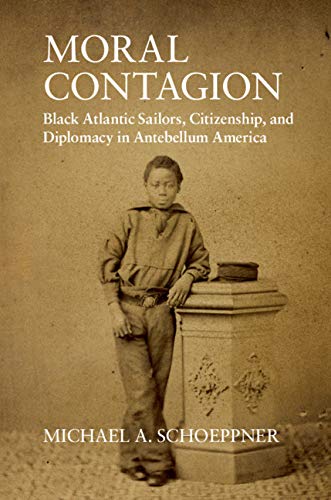
Moral Contagion: Black Atlantic Sailors, Citizenship, and Diplomacy in Antebellum America (Studies in Legal History)
Product details
| Management number | 231961995 | Release Date | 2026/06/18 | List Price | US$14.48 | Model Number | 231961995 | ||
|---|---|---|---|---|---|---|---|---|---|
| Category | |||||||||
Between 1822 and 1857, eight Southern states barred the ingress of all free black maritime workers. According to lawmakers, they carried a 'moral contagion' of abolitionism and black autonomy that could be transmitted to local slaves. Those seamen who arrived in Southern ports in violation of the laws faced incarceration, corporal punishment, an incipient form of convict leasing, and even punitive enslavement. The sailors, their captains, abolitionists, and British diplomatic agents protested this treatment. They wrote letters, published tracts, cajoled elected officials, pleaded with Southern officials, and litigated in state and federal courts. By deploying a progressive and sweeping notion of national citizenship - one that guaranteed a number of rights against state regulation - they exposed the ambiguity and potential power of national citizenship as a legal category. Ultimately, the Fourteenth Amendment recognized the robust understanding of citizenship championed by Antebellum free people of color, by people afflicted with 'moral contagion'. Read more
| ASIN | B07M6YKZ5W |
|---|---|
| XRay | Not Enabled |
| ISBN13 | 978-1108664721 |
| Language | English |
| File size | 1.4 MB |
| Page Flip | Enabled |
| Publisher | Cambridge University Press |
| Word Wise | Enabled |
| Print length | 265 pages |
| Accessibility | Learn more |
| Screen Reader | Supported |
| Part of series | Studies in Legal History |
| Publication date | January 17, 2019 |
| Enhanced typesetting | Enabled |
Bestseller ranking
Antebellum



Customers who viewed this product also viewed
Sliquid
Correction of product information
If you notice any omissions or errors in the product information on this page, please use the correction request form below.
Correction Request Form